Roadmap capacity planning
Know what your team can actually carry.
TeamMath compares what your roster can supply against what your projects demand — week by week, discipline by discipline — and tells you plainly whether the roadmap fits.
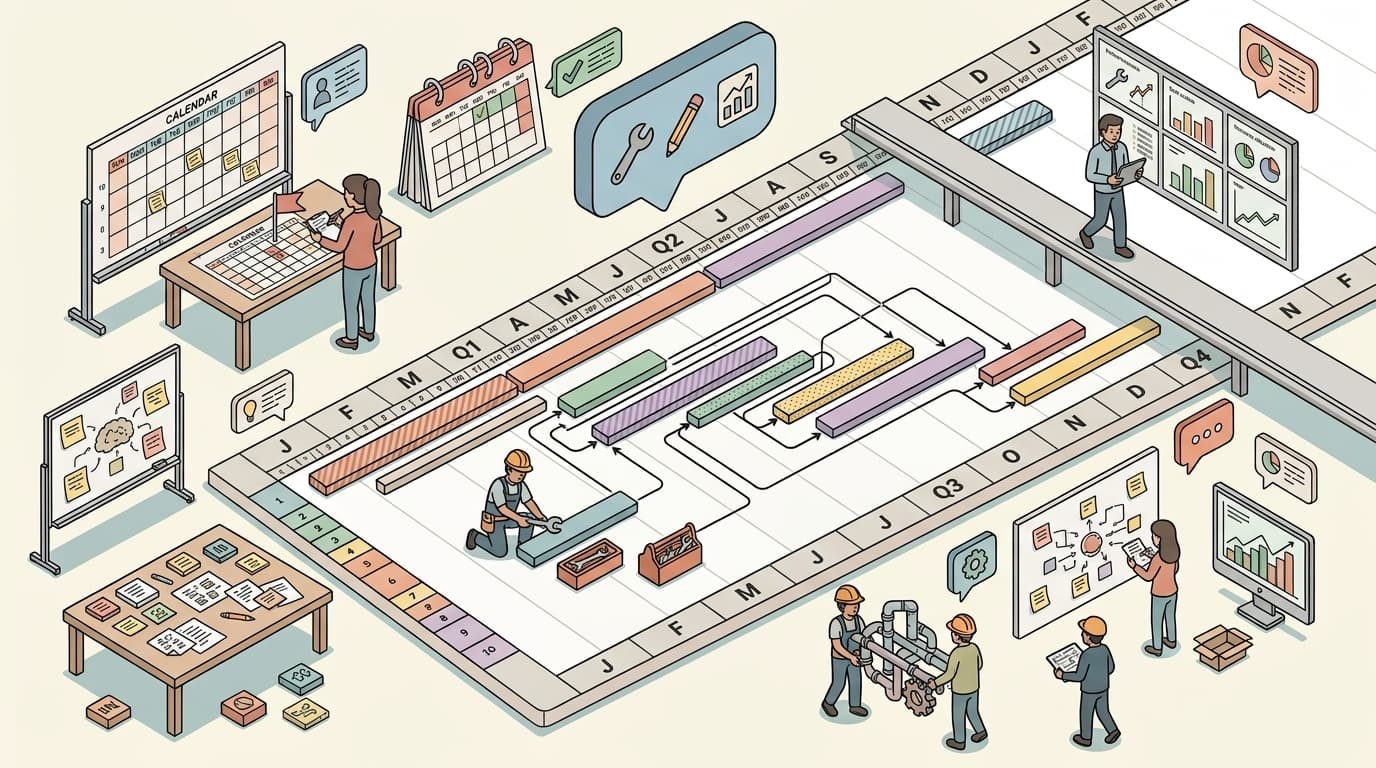
The problem
Roadmaps are drawn in quarters. Capacity is spent in weeks.
A plan looks fine on a slide until three projects want the same two designers in the same fortnight. The spreadsheet that should have caught it double-counts the person who does both design and front-end, and nobody trusts it enough to say no.
TeamMath does one thing: it answers “does this fit?” with numbers small enough to check by hand, and tells you where and when it stops fitting.
The verdict
Not a dashboard. A sentence you can repeat in a meeting.
Every verdict names the discipline, the size of the gap in people and the date it begins — so the conversation moves straight to what to do about it: shift a flexible project, re-split someone's focus, or make the case for a hire.
Every discipline covers its demand in every week of the plan.
Design runs 0.5 people short for 3 weeks from 14 April.
Backend is 1.8 people short from 2 June until the end of the plan.
Example output — illustrative figures.
What TeamMath deliberately isn't
No timesheets. No task boards. No assigning Anna to Project X on Tuesdays. TeamMath works one level up — pools of capacity against portfolios of demand — which is exactly the level a roadmap is decided at.
FAQ
Questions planners ask first
Is this a resource scheduler?+
No. TeamMath never assigns a person to a project. People add up to capacity pools per discipline, projects declare what they need, and the engine compares the two. That is what keeps it small enough to trust.
Do I have to track holidays and time off per person?+
No. A roadmap plans months ahead, and nobody knows which days someone will be away in October. Public holidays live in the org calendar; everything else is a flat absence percentage, per organisation or per person.
What does "people" mean in the numbers?+
Full-time equivalents for a week, after overhead and absence. "1.5 people short" means one and a half full-time people working that discipline all week would close the gap.
Who can change the plan?+
Admins and planners. Viewers see the roadmap and the verdict but can't edit — useful for stakeholders who want the answer without the controls.
Find out whether next quarter fits — before it starts.
Create an account, set up your organisation, and put your roster next to your roadmap.
Get started